Study a BA (Hons) Independent Filmmaking degree in Manchester and develop the creative, technical and business skills needed to build a successful career in the film industry. Learn editing, scriptwriting, audio for film and TV and film production while creating professional-quality projects and developing your own creative voice as a filmmaker.
The UK is a world leader in independent film, and Futureworks helps passionate, aspiring filmmakers develop the skills, experience and creative confidence needed to succeed. Working with award-winning professionals on industry-standard equipment, every Futureworks student has the opportunity to realise their creative potential!
You can check out our incredible studios, labs and learning spaces here.

• Hard drive / storage (2 x 2TB HDDs / 1 x SD Card): From £150
You may find it beneficial to invest in additional equipment and/or study resources to support your learning. Example costs are:• Headphones approx. £50-£300
Additionally, there may be the option of attending events outside of Futureworks which would further enhance your studies. Example trips are:• Bolton Film Festival: £20-40, plus individual travel costs
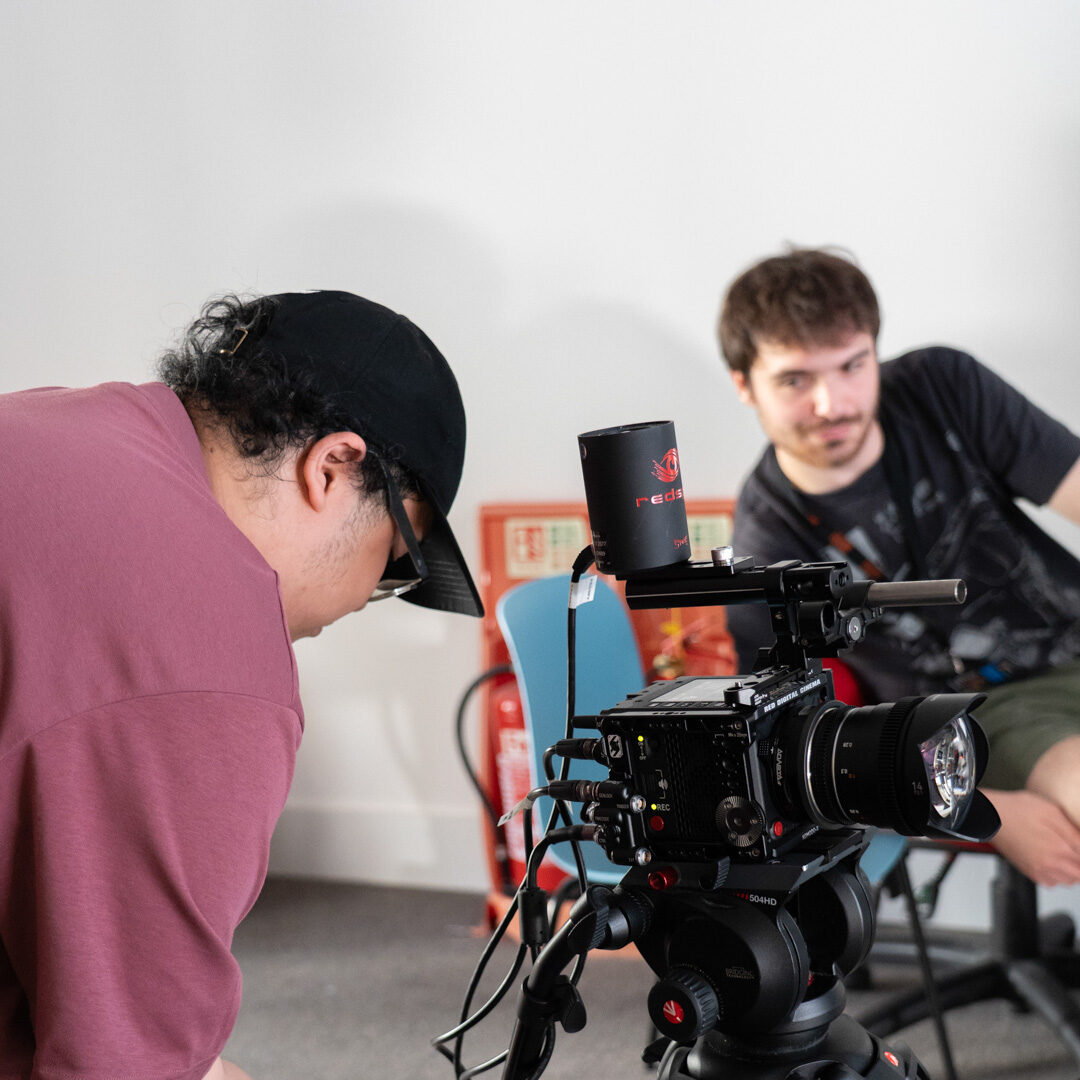
Graduates of our Independent Filmmaking degree leave with a professional grade portfolio, your first feature film, and a prepared proposal ready for you to approach investors.
By the time you complete the course you will be an independent filmmaker ready for your chosen career, that could be in the world of music videos, short films, documentaries or even feature films.
To be considered for this course, you will require 104-120 UCAS points.
This could be gained via a number of qualifications, for example:
You can apply for this course by applying directly to Futureworks. Alternatively, you can apply via the UCAS system. The UCAS codes for this course are as follows:-
UCAS Code: F3M6
Institution Code: F98
If you have any questions please call us on 0161 214 4602 or email admissions@futureworks.ac.uk
Successful applications will receive an offer directly from Futureworks (and via your UCAS application if you applied through UCAS).
More information on our admissions process can be found in the Student Recruitment and Admissions Policy in the Policy Hub

Our Independent Filmmaking degree combines creative exploration with industry-led learning to help you develop the knowledge, practical skills and professional portfolio needed for a career in the film industry. You’ll be taught by tutors currently working in the industry who bring professional practice and real-world insights into the classroom, you could even find opportunities to make industry connections as a student!
We have small class sizes, meaning you’ll get lots of individual support, regular feedback and direct access to tutors throughout your studies. At Futureworks, you’re a name, not just a number.
Whether you’re looking to build specialist expertise, develop an industry-ready portfolio or take the next step towards a creative career, an Independent Filmmaking degree at Futureworks provides a supportive, industry-focused environment for you to grow.
Futureworks Independent Filmmaking graduates have gone on to work for a range of organisations across the creative industries. Alumni have secured roles with employers including the BBC, ITV and Disney.
Graduate outcomes vary and depend on factors such as individual experience, portfolio quality, and available opportunities at the time of graduation.
Manchester has plenty of independent student accommodation providers to choose from!
See our student accommodation guidance and a list of providers here.
All of our courses are £10,050 per year for home students, and £17,000 per year for international students.
Read more about fees, funding and student finance options here.
Yes! We currently offer four financial support funds to eligible students:
Read more about these funds and eligibility here.
At Futureworks, we offer 1-1 pastoral care and a free in-house councelling service for all students. Speak to our Student Wellbeing team about mental health, financial worries, disability support, or anything else that worrying you.
Read more about our Student Wellbeing services here.