Music Production

BA (Hons) Undergraduate Degree

UCAS Code WJ39
Start Date 14/09/2026
Duration 3 Years full time
UCAS Points 104-120

Places available for September 2026 | Apply Now!

Course Overview

Study a BA (Hons) Music Production degree in Manchester and develop the creative, technical and business skills required for a successful career in the music industry. Learn production, recording, mixing, mastering and sound design while producing professional-quality work in industry-standard studios.

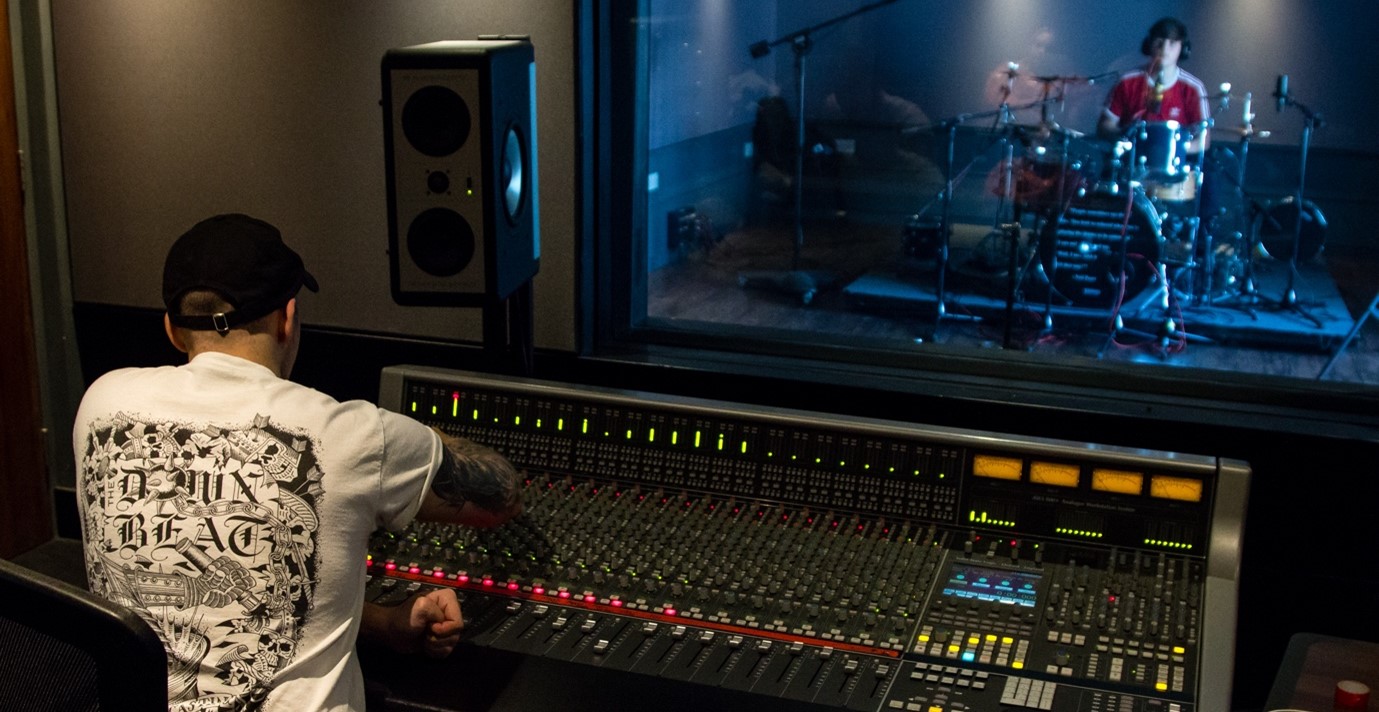
Futureworks boasts 10 professional-grade music, mastering and recording studios, all available for you to get the best out of your Music Production course. No matter what genre of music you prefer we have the right combination to meet your creative needs. Release music with our in-house label, 1043 Recordings, and gain experience of signing contracts and music licensing to take into your future career.

This award is validated by The Open University.

What will I study?
  • Music Production
  • Sound Design
  • Mixing
  • Studio Production
  • Sound Design
  • Creative Composition
  • Music Mastering
Production (40 credits)
This module is designed to develop your skills as a producing artist and music creator. You’ll explore creative approaches and strategies employed by notable artists and producers alongside developing your own production techniques using professional music production software. Whatever your genre, style, or specialism this module will help you to develop your own recognisable and personal style as a producer.
Working in the Studio (40 credits)
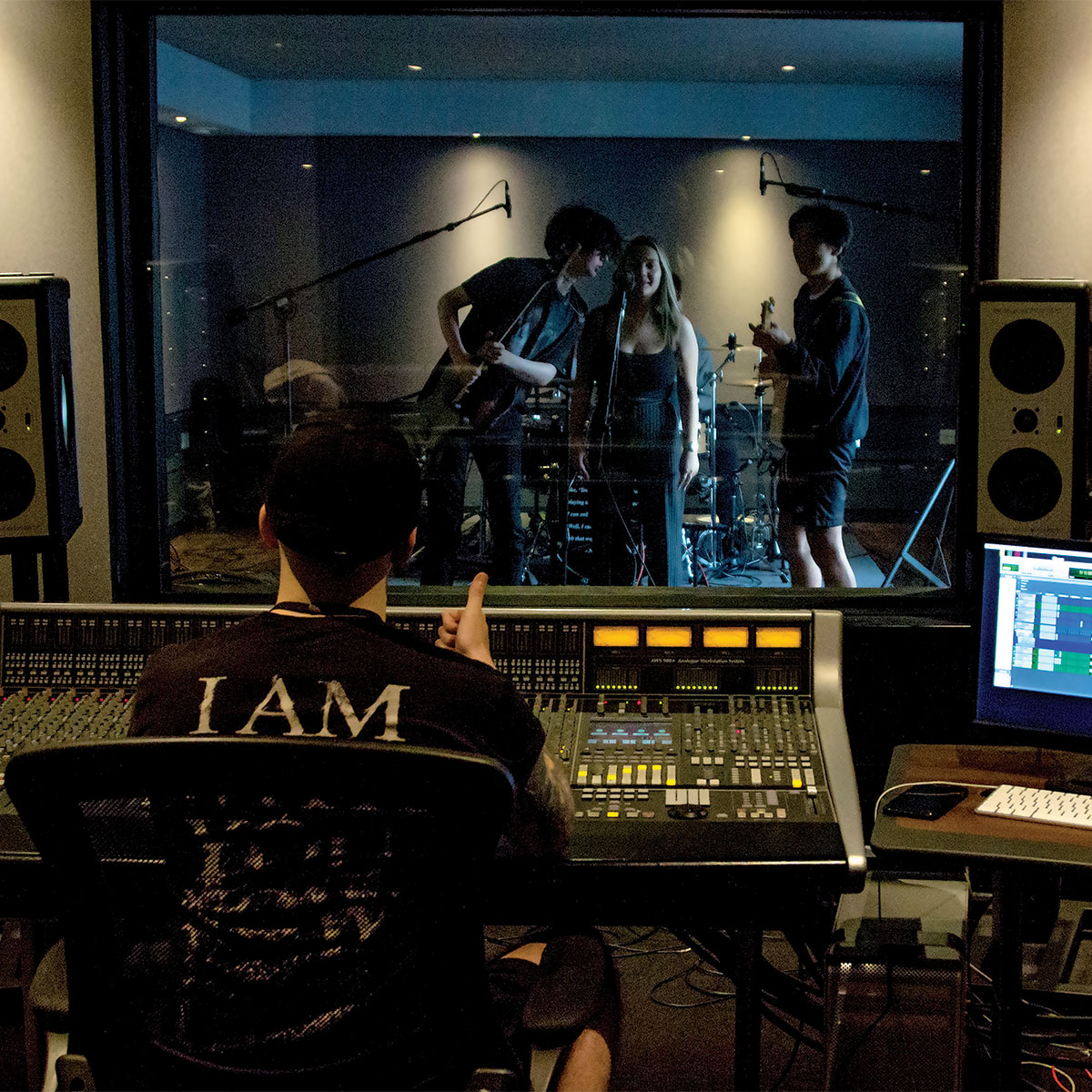
This is a hands-on experience in real-world recording studio facilities. In this module you’ll learn the skills needed to take your productions out of the box and into the studio. You’ll learn creative and practical techniques for studio-based production in managing live sessions with individual or multiple artists and explore microphones and studio hardware to develop the expertise to produce music that showcases your unique creative voice.
Mixing (20 credits)
This module focuses on the core principles of music mixing, equipping you with the technical and creative skills essential for a modern mix engineer. You’ll learn how to construct mixes and develop your technical and creative abilities while exploring the role mix engineers play in the music industry.
Professional Development (20 credits)
Study marketing and release strategies to build a professional online presence. This module will help you develop the skills needed to succeed in today’s music industry. You’ll explore proven methods for strategically marketing your artistic brand across digital channels and gain insights into effective release campaigns that can increase your music’s reach and impact. You’ll explore how the internet has changed the musical landscape through research and start building your own online brand and platform to showcase your music and achievements.
Studio Production (40 credits)
This module opens up more advanced studio facilities and exposes you to the recording studio as a creative space. Experimenting with studio hardware and software, exploring the acoustic properties of the live room to capture performances is all geared toward adding sophistication and complexity to your production work, developing a more individual sound palette to make your music stand out.
Sound Design (40 credits)
This module explores the relationship between sound, visuals, and technology. You’ll examine how notable artists and professionals combine music, sound, and visuals. You’ll learn practical skills and techniques to manipulate and shape sound content and sync it to visual media. Driven by a mix of samples, synthesis and software instrumentation you will create soundscapes and musical pieces for both traditional video content and interactive non-linear applications.
Professional Preparation (20 credits)
In this employability-focussed module, you’ll work on a real-world project for an actual client. Lectures will cover relevant creative practices to prepare you for the project. You’ll receive feedback through one-on-one tutoring and peer review sessions as you work independently on the project.
Creative Composition (20 credits)
Expanding your toolkit of composition and production techniques, this module will help you build on the composition and music production skills developed your first-year production work, refining your ability to create original music compositions and polished productions. In addition, there is also a strong industry focus, examining and producing commercial arrangements working to TV and film briefs and delivery standards.
Major Project (40 credits)
This module provides a platform for you to specialise; to showcase your best work focused on your chosen career path and in turn your readiness for employment or further study. You will engage in tutorial discussions to support you as an individual in developing content and in consolidating skills and knowledge gained throughout the programme.
Advanced Studio Production (20 credits)
This is the culmination of your studio and production work throughout the course. Learning and producing work in our most advanced studios to consolidate the level of detailed knowledge and experience required to prepare you for a successful career in the music industry.
Music Mastering (20 credits)
This is the finishing touch. Delivered in our dedicated mastering studio, this module examines the role of a Mastering Engineer, developing advanced critical skills and detailed knowledge to take your music to a professional standard release ready level.
Professional Portfolio (40 credits)
This module develops your skills and knowledge in presenting an analytical research proposal, initiating the development of a professional body of work, investigating methodologies for vocational aspirations through independent study, appraising the skills necessary for producing a contextual report following academic conventions, and exploring current business practices.
Mode of Delivery
Full-time, in-person, on-campus
In-Person Lessons
Typically between 12 and 14 hours a week
Self-study time
Typically between 35 and 40 hours a week
“Futureworks is not just a university. Futureworks is a community of caring, hard-working creatives who always strive to do the best they can and help out others whenever they can. Because Futureworks is quite a small university, the intimacy between tutor and student can’t be matched, They’re always there to help whether its on e-mail or discord. 10/10 so far can’t wait to see what the next few years have in store.”

Michael Parnell
BA (Hons) Music Production

Where can this degree take me?

Music Production graduates have a broad range of industry opportunities available to them, such as:


  • Songwriter
  • Composer
  • Music Producer
  • Recording Artist
  • Mixing Engineer
  • Mastering Engineer
  • Sound Designer
  • Music Programmer
  • Electronic Music Producer
  • Studio Manager
  • A&R Assistant
  • Music Content Creator
  • Live Performance Producer
  • Music Publisher Assistant
  • Label Coordinator

Students graduate with the technological and creative skills to apply to a wide range of career opportunities, or take further in MSc or MA programmes.

Have a question for us?
Complete the short form below and we'll be in touch within a few days.

To be considered for this course, you will require 104-120 UCAS points.

This could be gained via a number of qualifications, for example:

  • BCC or above at A2 Level
  • DMM or above at Extended Diploma Level
  • M or above at UAL Level 3 Extended Diploma Level
  • A proven interest in this area

You can apply for this course by applying directly to Futureworks. Alternatively, you can apply via the UCAS system. The UCAS codes for this course are as follows:-

UCAS Code: WJ39

Institution Code: F98

If you have any questions please call us 
on 0161 214 4602 or email admissions@futureworks.ac.uk

Successful applications will receive an offer directly from Futureworks (and via your UCAS application if you applied through UCAS).

More information on our admissions process can be found in the Student Recruitment and Admissions Policy in the Policy Hub