
Discover what game audio involves, from sound design and music to dialogue and audio implementation, and the skills needed for a career in game development.
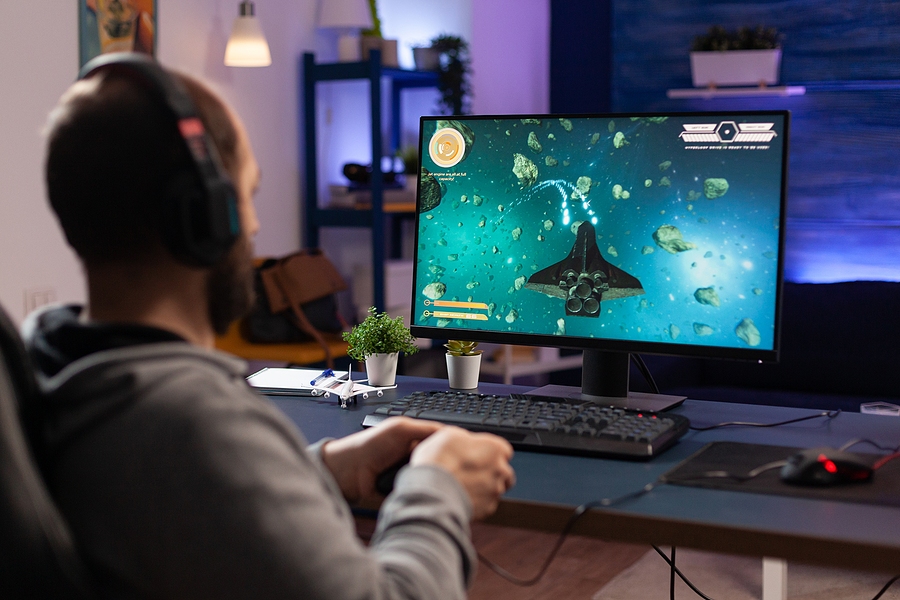
When you think about the sound in a video game, you might picture footsteps, explosions, weapon sounds or the satisfying noise of collecting an item. Sound effects are certainly an important part of game audio, but they are only one piece of a much bigger creative process.
Game audio can influence how players feel, understand their surroundings and interact with a virtual world. It can create tension, communicate important information and make an imaginary environment feel surprisingly real.
For anyone considering a game audio degree, understanding the breadth of the subject can reveal just how creative and varied this area of the games industry really is.
What does game audio actually include?
Game audio encompasses many different elements, including:
- Sound effects
- Music and composition
- Dialogue and voice recording
- Environmental sound
- Audio implementation
- Interactive music
- Sound editing and mixing
- Spatial and immersive audio
These elements need to work together to create a coherent experience for the player.
A horror game, for example, might use distant sounds, subtle environmental noises and changes in music to make you feel uneasy before anything actually happens on screen.
A racing game might use engine sounds, tyre noise and responsive music to make every corner feel more intense. The audio isn’t simply accompanying the gameplay. It’s helping to create it.
Sound designers do more than make noises
Sound design is one of the most recognisable areas of game audio, but even here there is much more involved than simply creating individual sound effects.
A sound designer might record real-world sounds, manipulate existing recordings or create entirely new sounds using digital tools.
Imagine designing the sound of a futuristic spaceship. There may be no real-world recording that perfectly represents what it should sound like.
Instead, a sound designer could combine mechanical recordings, electronic tones and processed sounds to create something original. The challenge is deciding what the player should hear and why.
Music can change the entire experience
Music is another important part of game audio. Unlike watching a film, playing a game can involve unpredictable actions. Players might spend several minutes exploring an environment, suddenly encounter an enemy or take an unexpected route through the story.
Game music therefore needs to work within an interactive environment. Composers and audio professionals may create musical systems that respond to what is happening on screen.
The music might become faster during combat, change when a player enters a new area or gradually build tension as an important moment approaches. This makes game music a particularly interesting combination of composition, technology and storytelling.
Dialogue helps characters come to life
Voice and dialogue are also central to many modern games. From conversations between characters to narration, announcements and reactive dialogue, recorded voices can add personality and emotion to a virtual world.
Game audio professionals may be involved in recording, editing and processing dialogue, as well as ensuring that the right lines play at the right moment.
They might also work closely with voice actors, directors, writers and other members of the development team.
What is audio implementation?
One of the less obvious areas of game audio is audio implementation. Creating a sound is only part of the job. Someone also needs to make sure that sound behaves correctly within the game.
For example, a footstep shouldn’t simply play once. The game may need to determine which footstep sound is triggered, depending on whether the character is walking on grass, wood, stone or another surface.
Similarly, music might need to change depending on the player’s location or actions. Audio implementation involves using specialist tools and game engines to connect audio assets with gameplay events. It’s where creative sound design meets technical problem-solving.
Why is environmental sound so important?
Think about a game set in a forest. You might hear birds, leaves moving in the wind, distant wildlife, branches snapping and water running somewhere nearby.
None of these sounds necessarily need to be the focus of the gameplay, but together they make the environment feel believable. Environmental audio can also provide subtle information, so a player can hear something before they see it, for example.
Where could game audio take you?
Developing game audio skills can open the door to a range of creative roles. Depending on your interests, you could explore careers in sound design, music composition, dialogue editing, audio implementation or technical audio.
Your skills could also potentially transfer into areas such as film, television, animation, immersive experiences and other digital media.
The industry is constantly evolving, creating new opportunities for people who can combine creative thinking with technical knowledge.